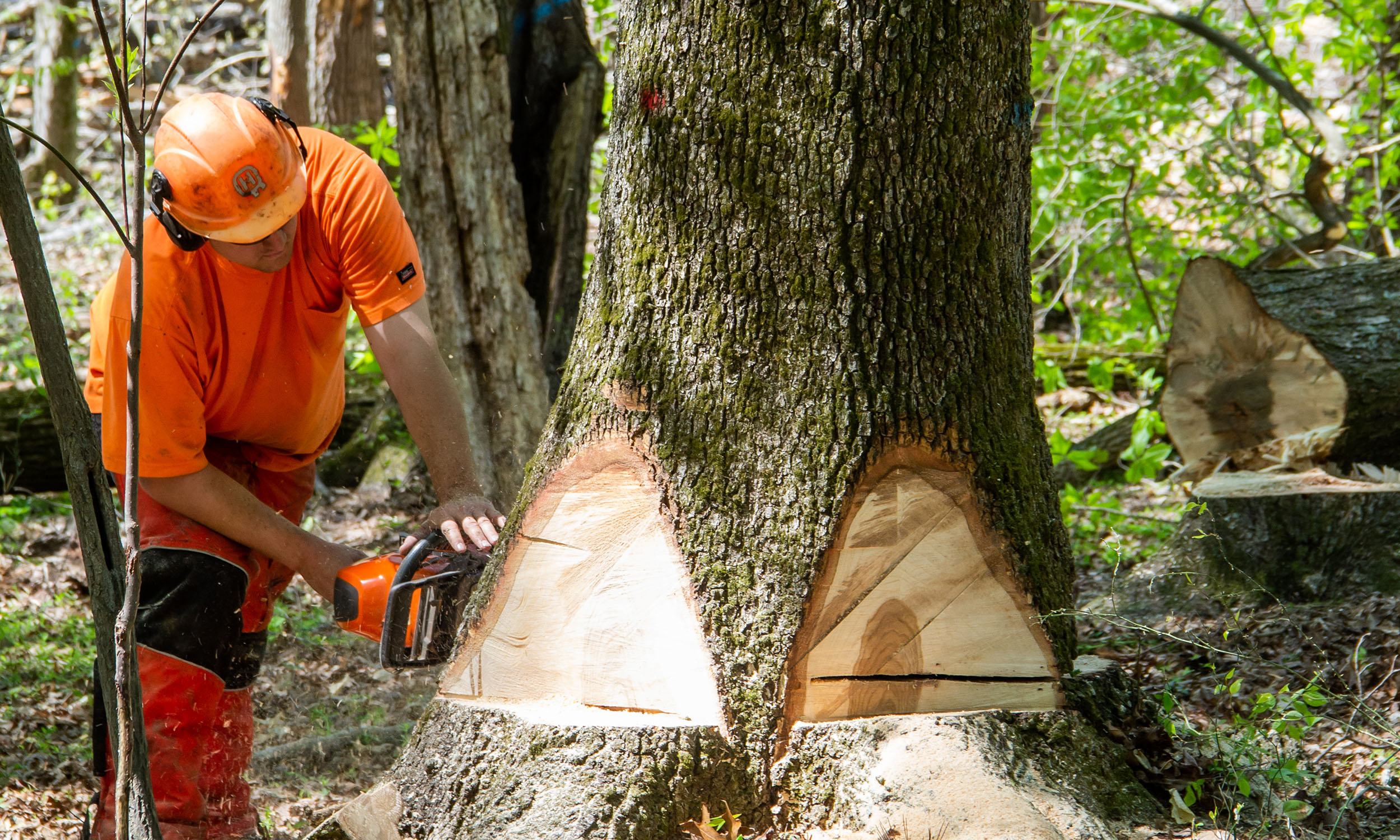
North Carolina Timber Harvest
North Carolina’s forests are one of the state’s most valuable natural resources. From the hardwood forests of the Appalachian Mountains to the wooded foothills and rolling terrain farther east, timber has long played an important role in North Carolina’s economy, communities, and working lands. For property owners, these forests can also represent a valuable asset that continues to grow over time.
North Carolina Timber Harvest And Responsible Forest Management
One of the most important characteristics of timber is that it is a renewable resource. When forests are managed carefully, trees can be harvested while allowing new generations of timber to develop. Responsible forest management considers what is growing on a property today as well as what the forest may look like decades from now.
A North Carolina timber harvest can provide income for a landowner, improve the condition of an overcrowded stand, prepare property for another use, encourage regeneration, or become part of a larger long-term forestry management plan. The right approach depends on the property, the timber, terrain, access, landowner objectives, and condition of the forest.
This is why harvesting timber should involve more than simply finding someone who can cut trees. The decisions made before equipment enters the woods can have a significant effect on timber value, future forest growth, access, drainage, and the condition of the land after harvesting is complete.
Church & Church Lumber Company works with North Carolina landowners to evaluate their timber and develop a harvesting approach based on the characteristics of the forest and their goals for the property.
Timber Harvesting In Northwestern North Carolina
Northwestern North Carolina contains some of the state’s most productive hardwood forests. Wilkes County and the surrounding foothills and mountain communities have forests containing valuable species that have been part of the regional timber industry for generations.
Timber harvesting in this part of North Carolina also presents challenges that should be considered during the planning process. Mountain and foothill properties can contain steep slopes, streams, drainage areas, difficult access points, existing logging roads, and sections of forest that vary considerably in species, maturity, and timber quality.
A harvest that makes sense on relatively level acreage may need to be approached differently on a steep mountain tract.
Access must be evaluated carefully. Logging roads, skid trails, stream crossings, landing areas, and equipment routes need to be considered before harvesting begins. Soil and water protection are also important, particularly on properties where steep terrain can increase the potential for erosion.
Professional planning helps determine how timber can be removed efficiently while protecting the landowner’s long-term interests.
Evaluating Timber Before A North Carolina Timber Harvest
The first question many landowners have is simple: What is my timber worth? There is no single answer based on acreage alone.
Timber value can be influenced by species, diameter, quality, maturity, accessibility, market conditions, and the amount of merchantable timber available. Two forested properties of similar size may have very different timber values.
An evaluation also needs to consider whether harvesting particular trees now makes sense from a forestry perspective. Some trees may have reached an appropriate point for harvesting, while others may benefit from additional growth.
Before making decisions, landowners should consider several factors:
- Timber Species: Different hardwood and softwood species have different markets and potential values.
- Tree Size And Quality: Diameter, form, defects, and overall log quality can influence the value of standing timber.
- Forest Density: Overcrowded stands may benefit from thinning that gives selected trees additional room to grow.
- Property Access: Roads, slopes, streams, and potential landing areas affect how timber can be harvested.
- Landowner Goals: A harvest designed primarily for immediate income may differ from one intended to improve a forest over several decades.
- Future Regeneration: Decisions about which trees are removed can influence the composition and quality of the next generation of forest.
Landowners who want to understand these considerations in greater detail can read our guide, Everything You Need To Know About Forestry Management and Harvesting Timber.
Choosing The Right Method For Your North Carolina Timber Harvest
Not every forest should be harvested the same way. The appropriate method depends on the condition of the stand and what the landowner wants to accomplish.
1. Selective Timber Harvesting
Selective harvesting removes particular trees while leaving others to continue growing. Trees may be selected based on maturity, condition, spacing, species, or management goals.
When properly planned, selective harvesting can concentrate future growth on desirable remaining trees while generating income from timber that is ready to be removed.
2. Timber Stand Thinning
Dense forests can create intense competition for sunlight, water, and nutrients. Thinning removes a portion of the stand so remaining trees have additional growing space.
A thinning operation may be appropriate when the objective is improving stand health and encouraging greater growth among selected trees rather than completing a larger harvest.
3. Clear Cutting And Forest Regeneration
Clear cutting can also have a legitimate role in forestry when it is used for the right reasons and planned correctly. Some tree species regenerate best when they receive abundant sunlight. In appropriate forest stands, a clear cut can create the conditions necessary for a new generation of trees to become established.
The key is matching the harvesting method to the property rather than assuming one method works everywhere.
4. Protecting The Land During Timber Harvesting
A successful timber harvest should be judged by more than the amount of timber removed.
Landowners also need to consider how roads, trails, streams, slopes, and remaining forest areas will be handled during the project. Poorly planned equipment routes can create unnecessary erosion or drainage problems that remain long after the timber has left the property.
Planning may involve determining appropriate locations for skid trails, protecting streamside areas, managing water flow around roads, choosing appropriate access points, and minimizing unnecessary disturbance.
Church & Church Lumber Company works with landowners using forestry practices intended to protect forest resources while accomplishing harvesting objectives. Our foresters help landowners employ Best Management Practices based on North Carolina Forest Service guidelines.
How Church & Church Lumber Helps With North Carolina Timber Harvesting
Church & Church Lumber Company is located in Wilkesboro, North Carolina, and our connection to the timber industry begins in the forest.
Our team works with landowners to understand what they want from their property before developing a plan for harvesting timber. That may include generating income from mature timber, improving the quality of a forest, preparing for future timber production, or accomplishing several objectives at the same time.
Our forestry and procurement work can include evaluating timber, determining potential value, developing harvesting plans, purchasing timber, coordinating timber harvesting, and helping landowners think beyond the current harvest.
Because we are directly involved in timber procurement and lumber manufacturing, we understand the importance of properly evaluating the resource before it is harvested.
You can learn more about the timber and logs we purchase on our Procurement: Buying Timber & Logs page.
Timber Harvesting Is Part Of Long-Term Forestry Management
For many North Carolina landowners, a timber harvest may happen only once or twice during their ownership of a property. The effects of that harvest, however, can last for generations.
Removing the right timber at the right time can create opportunities for new growth. Leaving appropriate trees can provide the foundation for a future harvest. Planning roads and access carefully can make future forestry work easier. Protecting soil and water resources can help maintain the productivity of the land.
That is why we view timber harvesting as one component of forestry management rather than an isolated transaction.
The forest that remains after the harvest matters.
Choose Church & Church Lumber For North Carolina Forestry Management
If you own wooded property and are considering a North Carolina timber harvest, Church & Church Lumber Company can help you evaluate your options before you make major decisions about your forest.
Whether you have mature timber that may be ready to harvest, an overcrowded stand that needs attention, or property you want to manage for future generations, our team can help develop a plan based on your forest and your objectives.
Choose Church & Church Lumber Company for forestry management and timber harvesting in North Carolina. Contact our team to discuss your property, learn more about the value of your timber, and determine the right next step for your forest.