Step One: Define Your Goals for Your Timberland
The first step should be taken far in advance of a timber harvest, ideally when you purchase or take over a property. Defining your goals can look like a variety of things, but engaging with a registered forester is key. Not only will a registered forester help you put together a forest management plan that can help you save money on property taxes, but they can also walk you through best management practices that will maximize the use of your property.
Some of the primary goals that you should go over with a forester include:
Harvest Timber To Generate Income
Property is inherently valuable, whether it be the actual property itself or the timber that can be extracted from it. Because we are talking primarily about timber harvests, looking into the different species and volumes of trees on your property can help you and your forester come up with a plan that maximizes income generation over time through selective harvests or clear cuts on portions of your property.
Harvest Timber To Wildlife Habitats
One of the auxiliary benefits of a timber harvest is wildlife habitat improvement. While it may not be true in all cases, a properly harvested timber stand can improve wildlife habitats for certain animals. By cutting large trees that crowd the overstory of a stand, the new available sunlight reaches the forest floor, allowing grasses, shrubs, and other small plants to thrive. These plants provide food and cover for animals such as whitetail deer and wild turkey.
Harvest Timber To Improve Forest Health
Something many people do not realize is how timber harvests can improve the health of a forest when properly managed. Make sure to work with a forester to work through each stand of timber on your property, evaluating the health benefits of a harvest for each area.
Step Two: Evaluate Your Timber
Once you have made a plan of action, it is time to begin evaluating your timber. A forester will do what is called a timber cruise, where they will assess each stand of timber. This is done using a specialized piece of equipment called a wedge prism. Foresters will grid out the harvestable timber and take down data from each plot. The evaluation includes:
- Tree Species
- Timber Volume
- Tree Quality
- Tree Age
Once all of this information is collected, the data will give you and your forester an idea of the total volume of marketable timber on your property, allowing you to present an overview of what is available to harvest as well as a close estimate of the value of the marketable timber.
Step Three: Meet with an Experienced Timber Buyer
Professional evaluations can save you from a massive loss of profitability on a property. Unfortunately, many timber buyers will undervalue your timber or use extreme urgency to coerce property owners into deals that can cost them thousands of potential dollars. Working with a forester who knows the market is extremely important at this stage, as they will connect you with timber buyers who are professional and honest.
An experienced timber buyer will ensure that you are being fairly compensated for the timber on your property and also understands market conditions so that timber can be purchased at the right time to maximize your profitability.
Step Four: Develop a Timber Harvest Plan
After a forester cruises and evaluates your timber, and you find the appropriate timber buyer, it is time to develop a harvest plan. There are several different harvesting methods, but the two most common are clear-cutting and selective harvesting.
Clear cuts are simple; all marketable trees in a timber stand are harvested regardless of quality. While it sounds a bit extreme, it can be a healthy way to help regenerate an older forest and protect it from long-term disease or deterioration of timber.
Selective harvest is when only certain trees are cut across a stand. This will leave a percentage of trees to continue growing over time until it is time for another harvest, creating a ‘two-age stand’.
After the harvest method is picked, it is time to plan out any logging roads and skid trails to ensure that timber can make it to the loading area while also protecting environmentally sensitive areas such as streams and other waterways. Trees to be harvested or protected will be marked at this point.
Step Five: Schedule the Timber Harvest
Scheduling a timber harvest can be extremely challenging. Finding loggers that can work on a project in the busy season can be tough, but you must also consider weather and ground conditions during the slow season.
Step Six: Harvesting and Marketing the Timber Safely and Efficiently
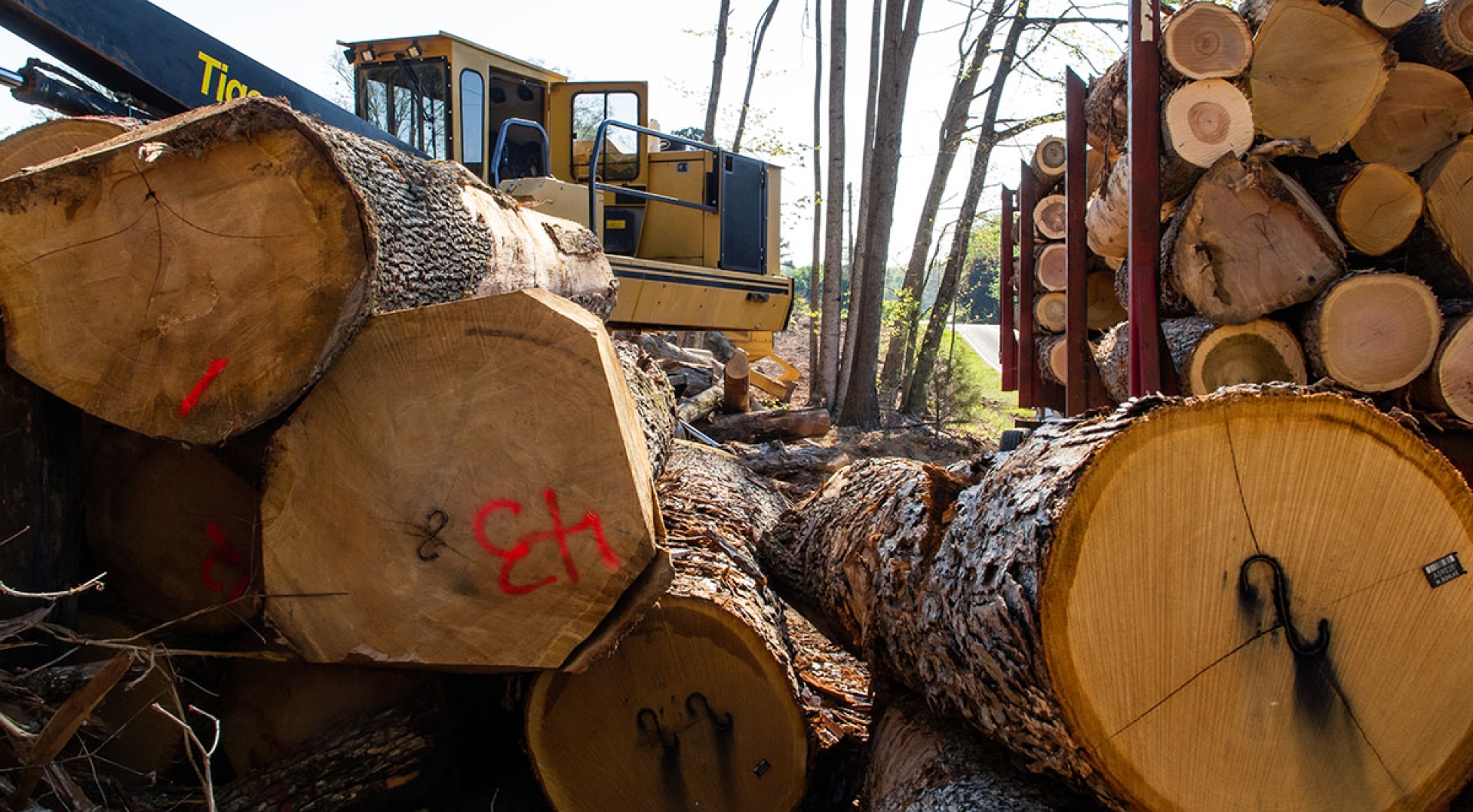
Finally, the time is here to harvest timber. Doing it safely is the number one priority for loggers, as felling trees can be extremely dangerous. Working with safe felling techniques, professional logging equipment, and making sure that sediment isn’t running into streams or across roadways are all considerations that loggers must understand before taking on any timber harvest. Professional loggers will know exactly how and when to harvest timber to minimize issues while remaining efficient.
Once timber is transported off-site, it is taken to the mill where it is sorted by species and graded for further production.
Step Seven: Forest Regeneration
After timber is harvested and sold, it is time to begin work on the cleanup and regeneration of the timber stand that was harvested so that it can continue to be a sustainable and productive harvest. There are several ways this can be handled.
- Natural Regeneration: When a forest is allowed to naturally grow back
- Replanting: In some circumstances, a forest may need to be replanted. This is especially true of pine stands.
Additionally, controlling invasive species and preparing for future timber harvests should be considered by landowners to ensure that the stand can last for generations.
Why Choose Church and Church Lumber Company for Your Timber Harvest
With four generations of experience working in the timber industry, Church and Church Lumber Company is the premier choice for timber harvests throughout Western North Carolina, Southwest Virginia, and East Tennessee.
Our family of companies manages the process from start to finish to ensure that your timber is fully utilized. Our priority is to conserve and protect our forests for future generations. From forestry to timber harvest, Church and Church Lumber Company is here for you! Contact us today to discuss how we can help you make the most out of your timber land.