Appalachian Hardwoods Are The Best in the World
Appalachia is a massive region containing nearly 737,000 square miles of land across the Eastern United States and Canada. Much of it is rural and heavily forested. This forestland is a massive carbon sink that absorbs more carbon dioxide from the atmosphere than it releases. These massive swaths of timberland are full of diversity, with hundreds of species of trees, many of which are marketable.
The first step in the sawmill cycle begins here with standing timber. Before trees are harvested, a timber buyer or registered forester evaluates the property and the trees growing on it. The goal is to understand what species are present, the size and quality of the trees, accessibility to the property, and current market conditions.
Some of the most popular marketable species of trees include:
- Red Oak: A durable, widely used hardwood with warm coloring and prominent open grain. Red oak is commonly used for flooring, cabinetry, furniture, and interior trim.
- White Oak: A dense, durable hardwood known for its moisture resistance and tighter, more consistent grain. It is well suited for flooring, cabinetry, millwork, architectural paneling, and furniture.
- Maple: A light-colored hardwood with a smooth, uniform texture that machines well. Maple is frequently used for cabinetry, flooring, furniture, and painted millwork.
- Cherry: A fine-grained hardwood that develops a deeper, richer color as it ages, gradually taking on warm reddish-brown tones. Cherry is a popular choice for furniture, cabinetry, and detailed interior applications.
- Hickory: One of the hardest domestic hardwoods, valued for its strength, durability, and distinctive natural color variation. Hickory is commonly used for flooring, furniture, cabinetry, and rustic millwork.
- Walnut: A premium hardwood prized for its deep color, distinctive grain, and excellent workability. Walnut is often selected for high-end furniture, cabinetry, paneling, and architectural interior finishes.
Not all trees are of the same value. Species diameter, number of usable logs, and accessibility can all affect the value of a timber stand. A careful timber cruise will help determine exactly how much of the timber can be harvested and what is marketable.
1. Timber is Purchased and Harvested
The next step in the sawmill cycle is the timber sale and harvest. Timber sales can be managed a number of ways, with the primary one being a lump sum sealed bid sale. This is where multiple sawmills will place bids on a prospective timber stand. The landowner will pick the best fit(high bidder, meets criteria, etc.) and sign a contract.
Once the contract is notarized, logging crews will begin staging on the property, building a landing, and building extraction roads based on access to the timber stand. The harvesting process needs to account for terrain, existing roads, property boundaries, environmental concerns, and other requirements found in the timber sale contract.
Responsible harvesting is an important part of the sawmill cycle because the quality of the logs arriving at the mill depends partly on how they are handled during logging and transportation. Trees are typically processed into logs in the woods before being transported to the sawmill.
2. Logs Are Transported to the Sawmill
After trees have been harvested and cut down into logs, the logs are loaded onto trucks and transported to the sawmill. Transportation is a critical step of the process because logs are heavy and difficult to move. Transportation is typically handled by highly skilled log truck drivers who can efficiently move lumber from the forest to the sawmill safely.
3. Logs are Sawed into Lumber, Kiln-Dried, and Sorted
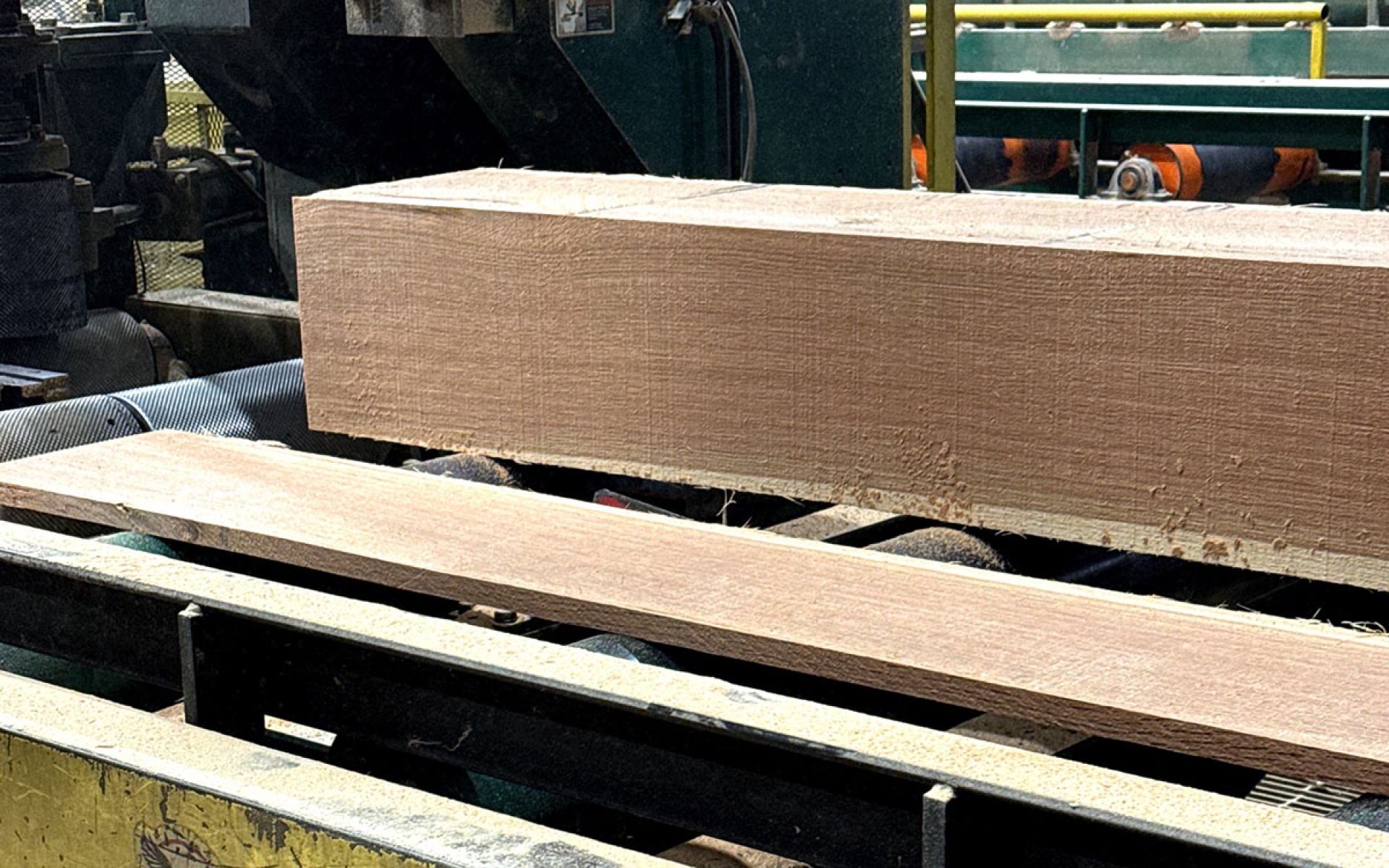
The main step of the sawmill cycle is the actual sawing of the rough-cut logs. Large sawmill equipment cuts logs into boards, slabs, or other lumber dimensions. The way a log is positioned and sawn can influence the grain pattern, board dimensions, appearance, and amount of usable lumber produced.
Sawmills need to balance several objectives during this process. They want to recover as much usable lumber as possible while producing boards that meet the requirements of their customers.
Kiln drying uses controlled heat, airflow, and humidity to remove moisture from the boards. The process needs to be carefully managed because drying lumber too quickly can contribute to defects such as checking, splitting, or warping.
After the logs have been cut down into their rough-sawn boards, lumber is separated by species, thickness, length, quality, and grade. This sorting process helps ensure that boards are marketed properly and directed to the appropriate customers.
4. Further Processes at the Sawmill
After lumber has been cut, kiln-dried, sorted, and graded, some of it may go through additional processing. For example, a planer mill may take the rough-sawn boards and produce more consistent and smoother planed boards.
Depending on the product, lumber may also be:
- S2S planed
- Trimmed to specific lengths
- Sorted for specific applications
- Kiln-dried
- Packaged into bundles
- Prepared for shipment
The appropriate processing depends on what the customer needs and how the lumber will ultimately be used.
5. Lumber is Packaged, Stored, and Shipped To Customers
Finally, boards must be properly stored and prepared to be shipped out to customers. Boards may be bundled according to species, dimensions, grade, and customer specifications. Proper stacking and storage help protect the material while it waits to be shipped to its final destination.
Hardwood lumber can travel to a wide variety of businesses and manufacturers. Depending on the product, customers may include:
- Cabinet manufacturers
- Furniture manufacturers
- Flooring companies
- Millwork manufacturers
- Construction companies
- Woodworking businesses
- Industrial manufacturers
- Lumber distributors
Although the lumber has left the sawmill, the cycle continues through the products manufactured from it. A board produced from an Appalachian hardwood tree could eventually become part of a cabinet, table, floor, door, architectural feature, or other finished product.
The journey from standing tree to finished lumber involves far more than simply cutting a log into boards. It is a highly involved process that brings together landowners, foresters, loggers, truck drivers, sawmill employees, kiln operators, graders, manufacturers, and customers. Understanding this deeply complicated cycle provides a better appreciation for the work that goes into producing quality hardwood lumber.
Church and Church Lumber Company
Church and Church Lumber Company has been producing high-quality Appalachian hardwood lumber for four generations. We connect landowners with marketable timber to customers across our region and the world.
To learn more about where you fit in the sawmill cycle, contact us today!