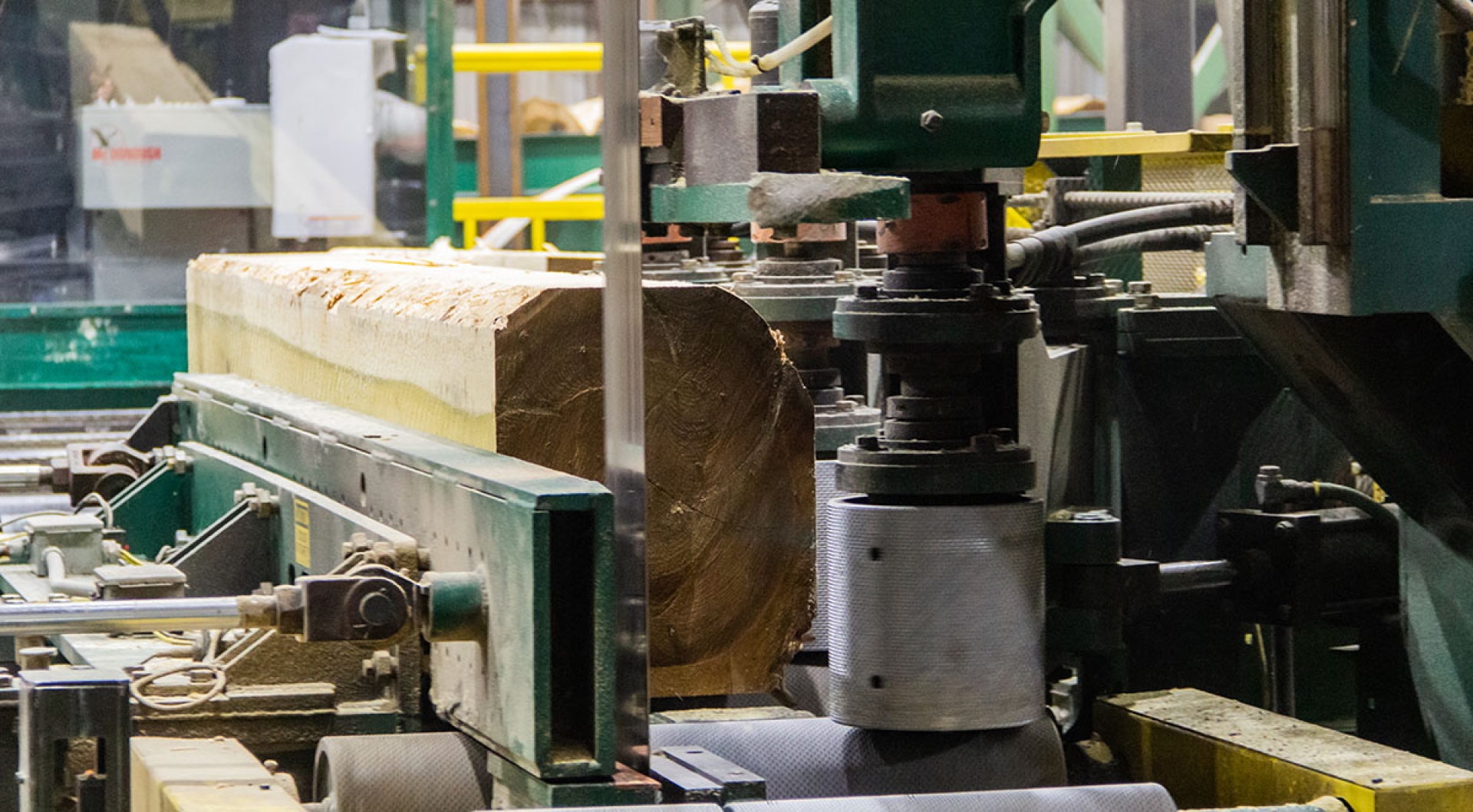
1. How Forests are Stewarded by a Responsible Sawmill
Responsible sawmills influence the way forests grow, regenerate, and remain productive. Their buying patterns, cutting decisions, and species needs shape how foresters plan harvests. Sustainability depends on cooperation between forestry teams and mills that understand the long-term value of healthy forests.
Responsible Mills Encourage Proper Timber Rotation
When a mill provides clear specifications on log size, species mix, and grade expectations, foresters can plan harvests that remove the right trees at the right time. This supports natural regeneration, reduces overcrowding, and promotes stronger growth across mixed stands. Appalachian forests thrive when mills reinforce balanced rotation rather than pushing for unsustainable harvest cycles.
Multi-Species Harvesting Strengthens Forest Health
Appalachian forests have a wide range of hardwood species. It is important to avoid overharvesting certain species in order to maintain diverse forests and support long-term productivity. When mills maintain demand for Red Oak, White Oak, Poplar, Hickory, Maple, Cherry, and Walnut, foresters can manage stands more effectively.
2. How Logs Move From the Forest to a Responsible Sawmill
Before a log reaches the headrig, a series of coordinated decisions sets the entire process in motion. Responsible mills maintain clear communication with landowners, timber buyers, and logging crews.
Timber Procurement and Ethical Buying Practices
Responsible procurement begins with evaluating timber tracts carefully. Buyers assess species composition, maturity, stand health, accessibility, and environmental considerations. Instead of focusing solely on the most profitable logs, responsible mills consider the overall condition of the forest and the best approach for long-term health. This encourages selective harvesting rather than indiscriminate cutting.
Logging and Transportation
Loggers who work with responsible mills prioritize minimal damage during felling and skidding. They protect soil quality, avoid unnecessary disturbance, and handle logs in a way that preserves grade and appearance. Efficient transportation ensures logs arrive before degradation affects value, which also minimizes waste.
3. How Quality Lumber Is Produced at a Responsible Sawmill
The work of a responsible sawmill goes far beyond running logs through a headrig. Each stage is managed with precision and care to maximize yield and quality.
Log Scaling and Sorting
Logs are scaled and graded with attention to detail. A responsible mill sorts by species, size, and grade to ensure the best possible breakdown plan. Accurate sorting raises recovery rates and helps customers receive predictable lumber.
Primary Breakdown Designed For Maximum Yield
Modern scanning systems help responsible mills identify the best cutting pattern for every log. By matching the natural shape of each log to the correct sawing approach, mills reduce waste and increase grade output.
Secondary Breakdown and Proper Edging
Boards moving through edgers and resaws are shaped with consistency. Clean edges, proper widths, and correct thicknesses depend on trained operators and well-calibrated equipment. A responsible mill monitors this process closely rather than relying on quick production speed at the expense of quality.
Grading and Sorting With NHLA Standards
Professional graders evaluate each board using NHLA rules. This ensures buyers receive accurate, consistent lumber. Responsible mills avoid grade inflation and maintain strict quality control.
4. How Kiln Drying Works in a Responsible Sawmill
Kiln drying is where responsible mills separate themselves even further. Moisture control is essential for wood stability and performance. Kilns reduce moisture content to levels suitable for furniture, flooring, cabinetry, and millwork. Consistent moisture control prevents cupping, warping, and unexpected movement during manufacturing.
Enhanced Performance for Manufacturers
Kiln dried lumber machines more cleanly, holds finishes reliably, and performs predictably during assembly. Responsible mills maintain strict control over the entire drying cycle rather than rushing loads through kilns.
5. How The Appalachian Hardwood Supply Chain is Strengthened by a Responsible Sawmill
A responsible sawmill influences supply, quality, pricing, and long-term forest health. Their actions support loggers, landowners, manufacturers, and distributors. By processing a broad array of species, responsible mills help avoid shortages and keep lumber flowing to manufacturers year-round.
Responsible mills operate with consistent production instead of chasing sudden price changes. This brings stability to markets that depend on predictable sourcing.
There is a Strong Connections Between Forests and Global Markets
Responsible Appalachian mills serve as the link between local forests and domestic or international markets.
A responsible sawmill protects the future of the Appalachian hardwood industry. They manage procurement ethically, operate with efficiency, and maintain quality standards that support every downstream user of hardwood products. They also ensure that landowners, loggers, and manufacturers benefit from a supply chain built on transparency and trust.
Manufacturers who rely on Appalachian hardwoods gain long-term advantages when they work with mills that value stewardship, predictable production, and high-quality standards.
6. How Loggers are Supported at a Responsible Sawmill
A responsible mill works closely with logging contractors, ensuring steady work and predictable purchasing patterns. Sudden pauses or inconsistent buying can disrupt entire communities. When a mill maintains clear communication about species needs, load timing, and pricing expectations, loggers can plan work schedules, maintain equipment, and support crews more effectively.
7. How A Responsible Sawmill Works With Landowners
Landowners depend on mills that treat their timber with respect. A responsible sawmill ensures that property owners understand what they are selling, how their timber is valued, and what harvesting practices will take place on their land.
Clear Communication About Timber Value
Responsible mills provide transparent information about how logs are scaled, measured, and priced. They explain species demand, grade expectations, and market conditions. This prevents misunderstandings and builds trust in the community.
Guidance On Long-Term Forestry Management
Many landowners want their forests to remain productive for future generations. A responsible sawmill collaborates with foresters to evaluate the property and determine which timber is ready for harvest and which should continue to grow. This guidance supports healthier stands and increases future value.
Respect For Landowner Goals
Some landowners prioritize habitat protection, while others focus on revenue or sawtimber development. Responsible mills adapt procurement plans to reflect those goals rather than pushing for aggressive harvesting.
How the Economy is Impacted by a Responsible Sawmill
The Appalachian hardwood industry depends heavily on sawmills that make thoughtful decisions. Their impact stretches across manufacturing, exporting, and regional development.
Stabilizing Regional Hardwood Markets
When mills operate predictably, manufacturers can plan long-term production more effectively. Predictability reduces cost fluctuations and improves forecasting for furniture plants, flooring mills, and architectural woodshops.
Supporting American Manufacturing
Appalachian hardwoods supply furniture makers in North Carolina, flooring manufacturers throughout the region, and millwork shops nationwide. A responsible sawmill helps ensure these industries receive consistent species, accurate grading, and stable moisture conditions.
Enhancing Export Reliability
International buyers rely on Appalachian hardwoods for high-end applications. Responsible sawmills ensure lumber meets global expectations for consistency and quality, strengthening the reputation of the entire region.
Choose Us For Responsible Forestry Management, Timber Procurement, and Sawmill Services
Our team is committed to the principles that define a responsible sawmill. We support landowners, loggers, and manufacturers with careful timber procurement, sustainable forestry planning, and reliable sawmill production. Whether you need logs purchased from your property, high-quality Appalachian hardwoods for manufacturing, or a long-term supply partner you can trust, we are ready to help.
Contact us to discuss responsible forestry management, timber procurement, and sawmill services across the Appalachian region.