Ten Steps From Tree to Board: The Local Sawmill Process
1. How Timber is Harvested Responsibly
The process starts in the forest, where professional foresters identify trees ready for harvest. Sustainable forestry practices ensure that logging supports future growth, wildlife habitats, and healthy ecosystems. Once the right trees are selected, loggers fell and trim them using chainsaws or harvesters. The logs are then loaded and transported to the sawmill while still green and kept fresh for consistent sawing results.
In regions like Wilkes County, local mills often work closely with forestry management teams to keep operations efficient and environmentally responsible. This partnership between foresters and mills is essential to maintaining North Carolina’s long-standing reputation for quality hardwood production.
2. How Logs are Prepared for Milling
When the logs arrive at the sawmill, they undergo an initial inspection and grading. Each log’s diameter, straightness, and overall quality are assessed to determine its most efficient use. Larger, straighter logs may be reserved for high-end lumber products, while smaller or irregular ones are used for industrial-grade materials.
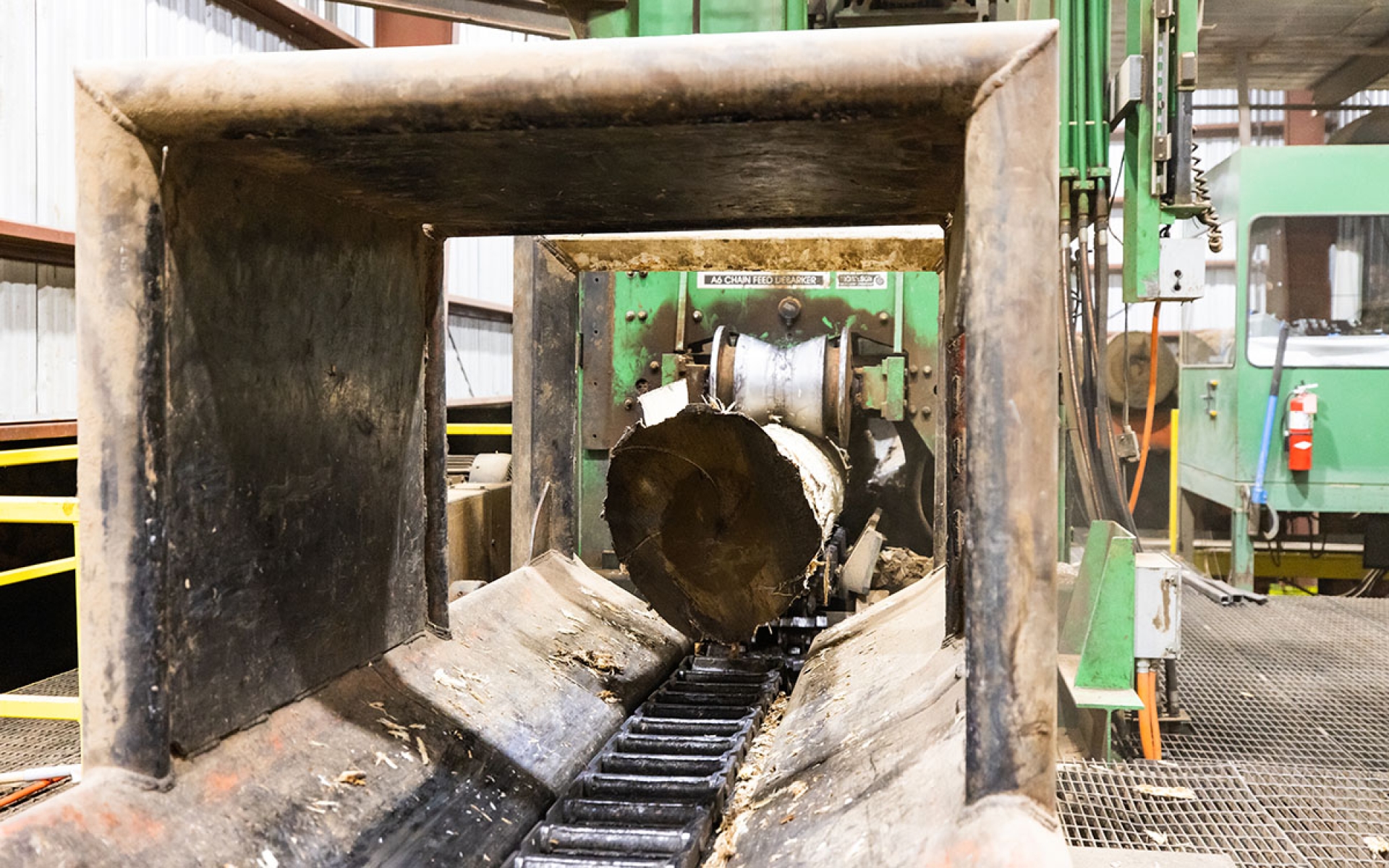
Before cutting begins, the logs are debarked. Bark removal prevents equipment damage and ensures cleaner, smoother cuts. Many mills use high-speed ring debarkers that strip bark quickly without removing valuable wood beneath the surface.
3. How The Logs Are Broken Down Into Slabs
This is the stage where a log first takes the shape of lumber. In the primary breakdown, large head saws or band saws cut the log into slabs or cants. Each cut is carefully planned to maximize yield while minimizing waste. Operators must consider the natural taper and grain of each log, deciding exactly where to place the first cut to produce the best boards.
Logs are sometimes rotated between cuts to achieve the highest value output, ensuring straight, uniform boards. A skilled sawyer’s judgment plays a vital role in determining how efficiently a log is transformed into usable material.
4. How The Slabs Are Cut Into Boards
After the initial breakdown, slabs move to secondary saws, such as resaws and edgers. These machines trim the slabs into boards of precise widths and thicknesses. The goal is to create lumber that meets exact specifications while maintaining structural integrity and grain quality.
5. How The Lumber is Sorted and Graded
After sawing, boards are categorized according to species, size, and quality. Grading determines how the lumber will be used, from high-grade appearance wood for furniture to structural lumber for construction.
Key grading factors include:
- Defects: The number and size of knots, splits, or cracks.
- Grain Structure: Straight, tight grain patterns provide strength and stability.
- Color and Uniformity: Consistency enhances aesthetic appeal.
This sorting process ensures customers receive material suitable for their intended applications. Grading also affects pricing and distribution across different product lines.
6. How The Lumber is Dried
Freshly cut boards contain significant go through a controlled drying process that prevents distortion, cracking, or splitting as the wood stabilizes.
Drying methods used at most modern mills include:
- Air Drying: Boards are stacked with spacers between layers to encourage airflow. Though slower, it’s energy-efficient and ideal for certain species.
- Kiln Drying: Kiln drying produces durable, consistent lumber for interior projects.
Structural lumber may remain slightly higher, while fine hardwoods are dried to around 6 to 8 percent. Proper drying ensures boards remain stable once installed in homes, furniture, or cabinetry.
7. How the Lumber is Planed and Surfaced
After drying, the lumber enters the planer mill. Planing creates smooth, uniform surfaces and ensures each board meets precise dimensional standards. This step also exposes the full color and grain pattern of the wood.
Some boards receive additional finishing treatments, such as sealing or waxing, to protect against surface checking. Finished lumber is then bundled, labeled, and prepared for shipment to customers throughout the region.
8. How Byproducts are Recycled and Repurposed
Nearly every part of the log finds a use. Bark, sawdust, and wood chips are recycled into mulch, biomass fuel, or composite materials. Offcuts and trimmings are often used in pallet manufacturing or paper production.
By fully utilizing every byproduct, mills reduce waste, increase efficiency, and maintain a smaller environmental footprint. This practice supports both sustainability and profitability.
9. How We Use Technology to Improve Efficiency
Modern sawmills rely heavily on advanced equipment. Computer-controlled sawing systems and laser scanners analyze each log in real time, mapping the ideal cutting pattern for yield and quality. Automation ensures consistent production while reducing downtime and material waste.
The use of digital optimization tools allows operators to adjust quickly for different species or customer requirements. These technologies help North Carolina mills stay competitive in both local and national markets.
10. How To Find the Value of the Process
The sawmill process links environmental stewardship, precision craftsmanship, and community impact. Each step, from tree selection to final shipment, reflects a balance between resource management and production efficiency. The result is a steady supply of reliable lumber that fuels regional growth and supports local industries.
The process also keeps forestry sustainable, ensuring that future generations will have access to healthy forests and renewable wood products.
Choose Church and Church for Forestry Management, Timber Procurement, and Sawmill Services
If you manage timberland or need a dependable source of quality lumber, work with professionals who understand the complete sawmill process. From responsible timber procurement to precision cutting and drying, our team brings consistency and expertise to every job.
Contact us today to learn more about our forestry management, timber procurement, and sawmill services. Together, we can continue turning North Carolina’s timber into the high-quality boards that builders, manufacturers, and homeowners depend on.