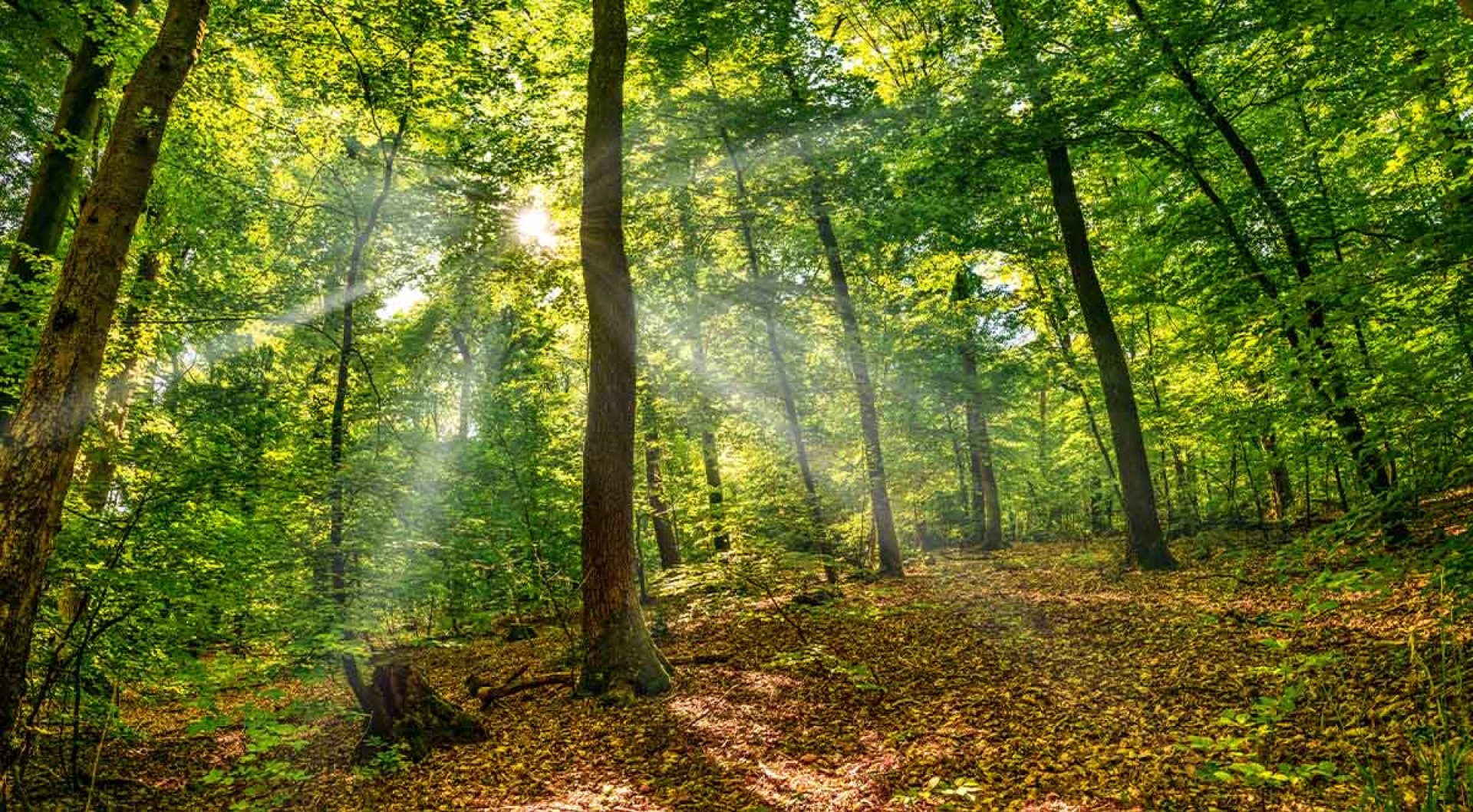
This summer, consider how targeted management activities can enhance your forest's health, productivity, and ultimately, its value when harvest time arrives. Let's explore the most effective summer timber management strategies for Appalachian forest owners.
Understanding Summer Forest Dynamics
The summer months bring unique conditions to our region's forests that smart landowners can leverage:
Active Growth Period
Summer represents the most active growth period for most hardwood species in our region. The combination of longer daylight hours, warmer temperatures, and typically adequate moisture creates ideal conditions for diameter growth in your valuable timber species. This accelerated growth makes summer an excellent time to identify which trees deserve to capture this growth potential and which might be better removed to redirect resources.
Visible Forest Health Indicators
Summer foliage provides the best opportunity to assess tree health and vigor. Problems like disease, insect infestation, or nutrition deficiencies become more apparent when trees are fully leafed out. The trained eye can spot issues like oak decline, maple dieback, or emerald ash borer damage that might be invisible during dormant seasons.
Understory Development
Summer also brings rapid development of understory vegetation. While this can provide valuable wildlife habitat, excessive understory competition can impede regeneration of desirable timber species and complicate future harvest operations if not properly managed.
Key Summer Management Activities
1. Conduct a Comprehensive Summer Assessment
Before implementing any management activities, start with a thorough assessment of your timber stand's current condition. Summer is ideal for evaluating:
- Species composition: Identify the mix of commercial and non-commercial species
- Tree health and vigor: Note signs of disease, insect damage, or environmental stress
- Stocking levels: Determine if stands are overstocked, properly stocked, or understocked
- Regeneration status: Assess the presence and health of desirable seedlings and saplings
- Invasive species: Identify problematic invasive plants while they're easily visible
This assessment provides the foundation for informed management decisions. For most landowners, partnering with a professional forester yields the most accurate evaluation. Church & Church's forestry team offers complimentary initial consultations for landowners considering future timber sales.
2. Implement Timber Stand Improvement (TSI)
Summer is an excellent time for timber stand improvement activities that enhance the quality and value of your future timber harvest:
Crop Tree Release
This selective approach focuses on identifying your stand's most valuable future crop trees and removing competing trees that limit their growth potential. By eliminating less desirable competitors, you redirect soil nutrients, moisture, and sunlight to your highest-value trees, accelerating their growth and enhancing their future value.
For maximum effectiveness, focus on releasing the crown of selected crop trees by removing trees whose crowns directly compete with them. In Appalachian hardwood stands, properly implemented crop tree release can increase diameter growth by 50-100% on selected trees.
Culling Undesirable Species
The summer growing season allows for precise identification of less valuable species that compete with commercial timber. Selectively removing these trees through mechanical means or targeted herbicide application can dramatically improve stand composition and future value.
Common culls in our region include:
- Red maple in stands where oak management is prioritized
- Diseased or damaged trees unlikely to reach commercial size
- Low-value species with limited market potential
- Invasive tree species like tree-of-heaven or princess tree
Vine Control
Aggressive vines like grape, poison ivy, Virginia creeper, and bittersweet can damage valuable timber by deforming growth, causing crown breakage, or even girdling stems. Summer is the ideal time to identify and control these threats through cutting or appropriate herbicide treatments.
3. Invasive Species Management
Invasive plants pose a serious threat to timber value by competing with commercial species and interfering with regeneration. Summer is when many invasives are most visible and susceptible to control measures:
- Japanese stiltgrass: This annual grass spreads rapidly, preventing tree seedling establishment. Summer herbicide application before seed set can effectively control it.
- Multiflora rose: This thorny shrub creates impenetrable thickets that impede forest access and management. Summer foliar herbicide applications can be highly effective.
- Autumn olive: This nitrogen-fixing shrub competes aggressively with timber regeneration. Summer foliar treatments provide excellent control.
- Tree-of-heaven: Host to the destructive spotted lanternfly, this invasive tree requires specialized control approaches that are most effective during summer months.
Early detection and prompt treatment of invasives prevents them from becoming established and reduces long-term management costs.
4. Access Improvement
Summer's drier conditions make it an ideal time to improve access to your timber stand:
- Road maintenance: Repair existing access roads by filling ruts, clearing drainage structures, and stabilizing problem areas.
- Trail development: Establish new access trails for monitoring, recreation, and future harvest operations.
- Boundary maintenance: Refresh property boundary markings and timber sale boundaries.
Well-maintained access enhances your ability to monitor and manage your timber while potentially increasing its value to timber buyers by reducing harvesting costs.
Strategic Planning for Future Harvests
Beyond immediate management activities, summer is an excellent time to develop longer-term timber management plans that maximize value:
Harvest Scheduling
Work with professional foresters to determine optimal harvest timing based on species composition, tree age, market conditions, and your financial objectives. A properly timed harvest can significantly increase returns compared to arbitrary cutting schedules.
Regeneration Planning
If a harvest is planned within the next few years, summer is the time to evaluate regeneration potential and develop plans to ensure valuable species will reestablish after cutting. This might involve:
- Controlling interfering vegetation before harvest
- Planning specific harvesting techniques that favor desired species
- Considering supplemental planting where natural regeneration may be inadequate
Market Awareness
Stay informed about current and projected market conditions for various timber species. This knowledge helps inform both management priorities and harvest timing decisions. At Church & Church, our timber procurement team tracks market trends closely and can provide landowners with insights on species with improving market outlook.
Summer Wildlife Habitat Enhancement
For many landowners, wildlife habitat represents an important secondary benefit of forest ownership. Summer management can enhance habitat value while maintaining timber production objectives:
- Edge improvement: Create feathered edges between forest and open areas to increase habitat diversity.
- Water source development: Establish or enhance forest water sources during summer when construction conditions are favorable.
- Soft mast production: Protect and promote soft mast-producing species like black cherry, serviceberry, and dogwood that benefit wildlife while maintaining timber value.
These habitat enhancements can improve recreational opportunities while potentially increasing property value for future sale.
Hypothetical Case Study: Potential Summer Management Impact
To illustrate the potential benefits of summer management practices, let's consider a hypothetical scenario typical for Wilkes County, NC:
A forest owner with a 45-acre mixed hardwood stand primarily consisting of oak, hickory, yellow poplar, and maple implements a comprehensive summer management program including:
- Crop tree release focusing on quality white oak, red oak, and yellow poplar
- Reduction of competing red maple and sweetgum in designated areas
- Treatment of common invasives like Japanese stiltgrass and multiflora rose
Based on forest growth studies in the Appalachian region, such management activities could reasonably increase diameter growth on released crop trees by 60-70% compared to unreleased areas over a three-year period. The stand's composition would likely shift toward more valuable species, with improved conditions for oak regeneration where previously hindered by competition.
Forest science research suggests this type of summer management investment typically increases eventual harvest value by 30-40% while potentially shortening the time to optimal harvest by 7-10 years. These figures represent reasonable expectations based on documented growth responses in similar Appalachian hardwood stands, though individual results would vary based on specific site conditions, implementation quality, and subsequent management.
Professional Assistance for Optimal Results
While landowners can implement some summer management activities independently, professional guidance yields the best long-term results. Church & Church's forestry team offers services specifically designed for summer timber management:
- Professional timber stand evaluation and assessment
- Customized management planning
- Contractor recommendations for implementation
- Cost-share program application assistance
- Ongoing monitoring and adjustment
Our foresters understand both the biological requirements for healthy forest growth and the market realities that determine timber value. This dual perspective ensures management recommendations that enhance both forest health and financial returns.
Frequently Asked Questions
What is the minimum acreage needed for effective timber management?
While larger tracts offer more management flexibility, effective timber management can be implemented on properties as small as 10-15 acres. Even smaller woodlots can benefit from basic improvement practices, though commercial harvesting options may be more limited. Our foresters can help develop plans appropriate for your specific acreage.
How do I know if my timber is ready for harvest?
Harvest readiness depends on multiple factors including species, tree diameter, stand density, tree health, and current market conditions. Generally, high-value hardwoods like oak and cherry reach commercial maturity at 16-20+ inches in diameter, while faster-growing species like yellow poplar may be harvestable at smaller diameters. A professional timber cruise is the best way to determine harvest readiness.
How much does summer timber stand improvement cost?
Costs vary significantly based on stand conditions, treatment intensity, and whether work is performed by the landowner or contractors. Basic crop tree release might range from $75-150 per acre when professionally implemented, while more intensive treatments including invasive control may reach $200-300 per acre. However, cost-share programs are available that can cover 50-75% of these expenses for qualified landowners.
Are there government programs that help offset forest management costs?
Yes, several cost-share programs can help landowners implement summer management activities. The Environmental Quality Incentives Program (EQIP), the Southern Pine Beetle Prevention Program, and various state programs offer financial assistance for qualified forest management practices. Our forestry team can help determine your eligibility and assist with application processes.
How do invasive species affect timber value?
Invasive plants can reduce timber value through multiple mechanisms: competing with valuable tree species for resources, preventing natural regeneration after harvest, creating hazardous working conditions that increase logging costs, and in some cases, directly damaging trees through vine growth. Early control of invasives typically yields the highest return on investment.
Can timber stand improvement activities be combined with a partial harvest?
Absolutely. In many cases, a commercial thinning operation can accomplish timber stand improvement objectives while generating immediate income rather than representing a cost. For stands with sufficient volume, this approach can be ideal. Our procurement team can evaluate whether your stand might qualify for an improvement thinning.
How will summer drought affect my timber stand?
Prolonged summer drought can stress trees, making them more susceptible to insect and disease problems. During drought periods, it's generally advisable to delay intensive management activities that might cause additional stress. However, drought conditions can also help identify less vigorous trees that might be candidates for removal when conditions improve.
How often should timber stand improvement be performed?
In most Appalachian hardwood stands, timber stand improvement activities yield the best results when implemented every 10-15 years. However, this interval varies based on growth rates, stand conditions, and management objectives. Annual monitoring allows for timely identification of new threats or management opportunities.
Connect with Church & Church's Forestry Team
Summer presents a valuable opportunity to enhance your forest's health and future value. For landowners considering timber management this season, Church & Church's forestry team offers complimentary consultations to evaluate your stand and discuss management options.
Contact our head forester to schedule a visit to your property. Our team's four generations of experience in Appalachian forestry ensures you'll receive practical, market-oriented advice that enhances both forest health and your long-term returns.
Church & Church Lumber has been helping landowners manage and market their timber resources for four generations. Our comprehensive approach includes professional forestry services, top market prices, and sustainable harvesting practices that ensure the health of your forest for generations to come.