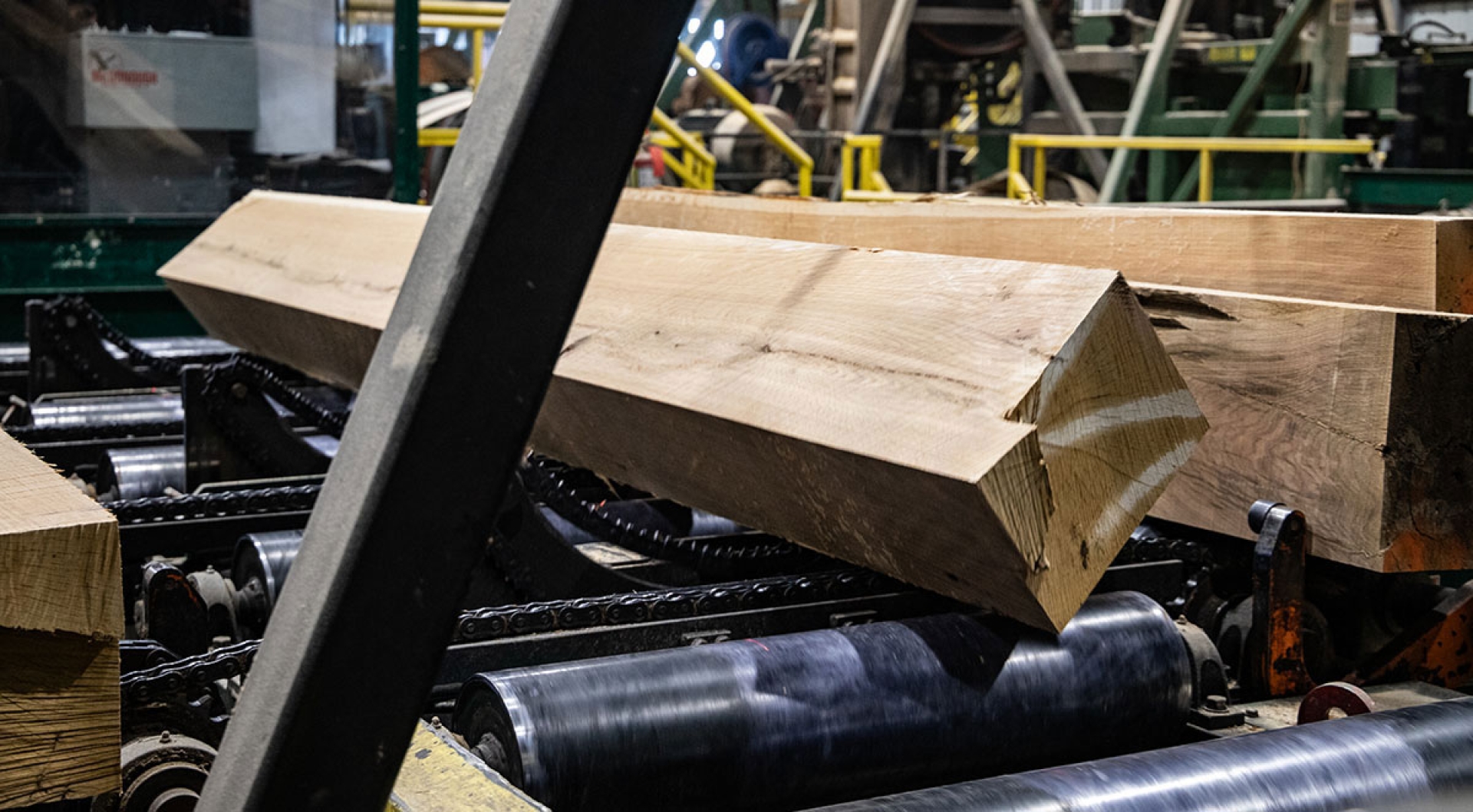
Sawmills Are Where Timber Becomes Usable Lumber
The sawmill industry plays a massive role in how we utilize one of our planet's most valuable natural resources. Sawmills are where logs are cut into lumber, which supports a wide range of products and is often used in downstream production across a multitude of industries.
Over the last century, the tools used for sawmilling have changed, but the process itself is fairly simple. Sawmills are typically made up of heavy-duty blades that convert raw logs into lumber, planks, and beams. These mills can be of a variety of sizes, from small portable units to massive industrial plants. Regardless of size, a sawmill debarks, cuts, and sometimes treats wood.
Today, a multitude of technologies are at the heart of sawmill operations. These technologies do everything from achieving tighter tolerances in lumber production to improving efficiency for environmental protection.
The Industrial Revolution and The Introduction of the Mechanical Sawmills
In the early 1800’s, the lumber industry was shaken up when some of the first steam sawmills were built. These sawmills used circular saws and could reach speeds of two-thirds of a mile per minute. This was absolutely groundbreaking. As the Industrial Revolution continued, sawmills began using guides and mechanical carriages that carried the log laterally, the distance matching the thickness of the lumber being cut.
These innovations carry on today. While we have moved to other fuel methods, hydraulic pumps, and even artificial intelligence, the foundations of modern sawmilling began in the 19th century.
1. From Traditional Milling to High Tech Production
For many years, sawmills relied heavily on operator experience to determine how logs should be cut. Skilled workers would visually inspect each log, estimate its quality, and choose patterns according to their experiences. While this method can produce good results, it was inconsistent and extremely labor-intensive. Today, sawmills integrate computer systems and digital controls into nearly every part of production.
Rather than relying entirely on human judgment and labor, modern mills use scanners, sensors, and a variety of other tools to optimize and guide cutting decisions and planning. Modern technology has enabled mills to evaluate thousands of cutting patterns within seconds, selecting the best possible method that maximizes the value of each log. Moving from human intuition to a more data-driven approach has made Samills far more productive while improving quality
2. 3D Log Scanning and Imaging Technology
One of the biggest innovations in sawmill technology is the use of scanning systems. These scanners create detailed three-dimensional models of logs before they are even cut. Lasers, cameras, and sensors measure every nook and cranny of a log with remarkable accuracy.
These scanners allow sawmills to calculate the most efficient cutting pattern before the log even reaches the saw. This helps mills minimize waste and maximize usable lumber.
More advanced systems now include X-ray or CT scanning, which can analyze the internal structure of the log. These scanners detect hidden defects such as knots, cracks, or internal splits. With this information, the mill can rotate the log and adjust cutting strategies to produce higher-grade boards.
In some cases, this technology has significantly increased both volume recovery and the value of lumber produced from each log.
3. Automation and Robotics in Modern Sawmills
Automation may be the biggest key driver of innovation in the sawmill industry. Sawmills have always been labor-intensive, with a small army of workers throughout each process ensuring that lumber is produced accurately and efficiently. However, as robotic technology has improved, many of these positions can be consolidated, increasing efficiency and safety while decreasing labor costs.
Robots are commonly used for:
- Sorting logs by size and species
- Stacking and bundling finished lumber
- Transporting boards between machines
- Packaging and strapping shipments
These automated systems improve production speed and consistency while also reducing workplace injuries. Automation also allows mills to maintain high production levels despite labor shortages or workforce limitations.
Additionally, automated systems operate with precise measurements and repeatable movements, which helps maintain consistent product quality across large volumes of lumber.
4. Real-Time Monitoring
Technology has become more interconnected than ever due to the “Internet of Things”. IoT has introduced real-time monitoring capabilities to modern sawmills. Sensors installed throughout the mill collect data on machine performance, environmental conditions, and output.
The data collected by these sensors is analyzed by software systems that provide real-time insights into mill operations. Managers can monitor production remotely, identify inefficiencies, and make adjustments immediately.
Real-time monitoring also improves safety by detecting potential equipment failures or hazardous operating conditions before they become serious problems.
5. Lumber Grading and Quality Control
One of the most important steps in the sawmill process is the constant quality control checks that are implemented. This is especially important for hardwood lumber that is used in furniture, flooring, and carpentry. Modern sawmills rely on automated grading systems to ensure consistent quality control.
These systems use high-resolution cameras and machine vision technology to inspect each board as it moves along the production line. The system analyzes characteristics such as knots, splits, grain patterns, and color variations.
Computer algorithms compare these features against grading standards and assign a grade automatically. Automated grading systems reduce human error and allow mills to process large volumes of lumber quickly while maintaining accurate classification.
Laser and sensor technology can also sort boards by grade and size, ensuring that each piece meets specific market requirements.
Church and Church Lumber Company Uses Technological Advances to Better Serve Our Clients
At Church and Church Lumber Company, we utilize a variety of technological processes to increase production and improve lumber quality across all of our wood products. Innovation is vital for our company to be able to not only compete, but also provide the best lumber available.
From robotics to grading automation, the integration of modern technology and four generations of hands-on expertise ensures that we are able to provide an incredible product to contractors and business owners alike.
To learn more about how Church and Church Lumber Company can accommodate your wood product needs, contact us today!