Triad, NC Sawmill and Forestry Management Services
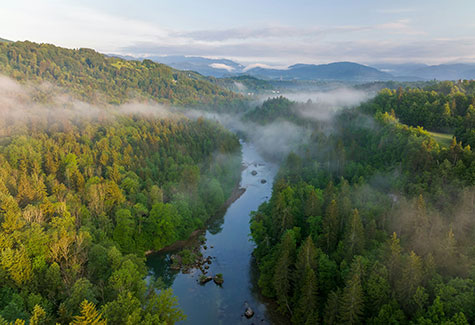 High Point, Winston-Salem, and Greensboro are the three cities that make up the Piedmont Triad of North Carolina. These cities have historically made up a very important part of North Carolina's history of industry and trade. The furniture industry, textiles, and tobacco have all made the triad a bit of an unofficial capital. Over time, many of these industries have waxed and waned, but as the Triad has changed, so has the influx of growth in new industries such as biotech and IT.
One thing that has remained unchanged is the massive tracts of land containing marketable timber in the areas surrounding these cities. Many landowners do not understand the value of their timber, and in many cases do not know where to start when trying to evaluate what they have. To many landowners' detriment, there are plenty of timber buyers who will go out of their way to pay low prices without putting the landowner and their needs first. This is especially true when it comes to the ecological impacts of a timber sale.
At Church and Church Lumber Company, we work with certified foresters to ensure that landowners make the most out of their timberland, while also protecting the ecology of the property.
Church and Church Lumber Company, Sawmill and Forestry Management Services
Church and Church Lumber Company is more than just a sawmill. We have a team of dedicated certified foresters who do whatever it takes to ensure that your property is well managed. In addition to timber purchase and harvesting, our professional foresters serve landowners by providing individual forestry management plans to help accomplish objectives on forested properties.
These objectives can be anything from simply allowing the forest to grow indefinitely, or may be more detailed. A detailed forestry management plan will prescribe a variety of treatments to ensure that your property’s timber is economically viable while also remaining environmentally sound.
Some common examples of prescriptions that may be found in a forestry management plan include:
- Controlled Burns: Controlled burns open up the forest floor and clear out snags and smaller trees. This makes for a healthier forest and allows trees that may have been suffocated by smaller unmarketable trees to grow stronger and healthier while also allowing for new saplings to pop up.
- Thinning Harvests: Removing a percentage of trees in young dense stands to reduce competition, allowing for remaining trees to grow larger and healthier
- Crop Tree Release: Selecting high-quality trees that can bring high values and removing competing surrounding trees to promote rapid growth.
- Clear Cutting/Selective Cutting: Timber harvesting is vital to meeting economic goals for many forests. Clear-cutting and selective harvesting are two ways in which timber harvests can be managed, with clear-cutting being a total harvest of all trees, while selective harvesting removes only the most valuable trees, leaving much of the forest intact.
In addition to these items, many foresters will include a set of “Best Management Practices” or BMPs to guide landowners to protect water quality. BMPs can include establishing buffer zones along streams, erosion control on logging roads, and ensuring sustainable long-term forest usage.
Why Work With A Sawmill That Offers Forestry Management Services
When choosing a sawmill to work with when cutting your timber, many will simply hunt down a logger and tell them to get to work. Some sawmills may undervalue your timber or not follow an environmentally friendly plan.
At Church and Church Lumber Company, our team of professional foresters works in conjunction with our loggers and sawmill operation to help you utilize your property to meet your objectives. Our goal is to help you achieve your forest management objectives. We offer transparent, customized forest management solutions, providing you with the necessary information, advice, and guidance to understand all your available options. We are committed to working diligently to deliver the results you're looking for.
Forest Management is Beneficial for the Environment
Although 300 million hectares of forest may sound like an enormous amount of land, it helps to view that number in historical context. In the seventeenth century, North America contained roughly 423 million hectares of forest. By comparison, today’s figure represents about a 30 percent reduction. At first glance, that decline might seem alarming, but the broader trend over the last century tells a more balanced story.
Forest acreage has remained relatively stable since the early 1900s. Much of the land that transitioned away from forests was cleared during the eighteenth and nineteenth centuries, when expanding agriculture and settlement reshaped the landscape. In the decades since, forestry practices have evolved significantly. Modern forest management emphasizes regeneration, sustainability, and long-term productivity rather than simple extraction.
Today, trees are replanted at an extraordinary rate. Each year, more than two billion trees are planted across the United States. Most of these come from the efforts of the forest products industry and private landowners who rely on healthy forests as a renewable resource. Additional planting programs are supported by local governments, state forestry agencies, and federal initiatives.
The result is a system where forests are actively managed and continually renewed. For every tree harvested for lumber, paper, or other wood products, new trees are planted to take their place. This ongoing cycle ensures that forests remain productive landscapes, providing materials, wildlife habitat, and environmental benefits while continuing to regenerate for future generations.
Key Benefits of Forest Management for Winston-Salem, Greensboro, and Surrounding Areas
- Reducing Fire Risk: Although large wildfires are more commonly associated with forests in the western United States, fires can and do occur in eastern forests as well. Responsible timber harvesting helps reduce the buildup of excess fuel, such as dead wood and overcrowded trees, lowering the potential severity of fires on managed land.
- Healthier Forest Growth: During a timber harvest, foresters and logging crews evaluate which trees should be removed. Trees that are diseased, damaged, or declining are often selected first. Removing these trees helps limit the spread of fungi, insects, and other problems that could affect nearby healthy trees.
- Less Competition for Resources: When forests become overcrowded, trees must compete for sunlight, water, and nutrients in the soil. Selective harvesting reduces that competition and allows the remaining trees, as well as newly planted seedlings, to grow more efficiently.
- Improved Safety: Dead or weakened trees can pose a risk to people, equipment, and nearby structures because they may fall unexpectedly. Forest management practices remove hazardous trees before they create safety concerns.
- Better Wildlife Habitat: Managed forests can support a wide range of wildlife. As harvested areas are replanted and new growth develops, they often create a mix of young and mature forest conditions. This variety can provide food, cover, and habitat for many different species.
Church And Church Lumber Company: Sawmill and Forestry Management in The Triad
You may or may not have objectives for your forestland, but now is the time to learn how to get the most out of your property. While harvesting timber is important, ensuring that it is done sustainably and can meet your long-term objectives for your property is vital. If you live in Winston-Salem, High Point, Greensboro, or surrounding towns in the Triad, reach out to the team at Church and Church for more information about our sawmill and expert forest management services.